Pay with ACH for another 3% OFF! 

MOTS-c is a mitochondrial-derived peptide (MDP) consisting of 16 amino acids. MDPs are bioactive hormones that have significant effects on energy regulation, skeletal muscle function, and mitochondrial communication.
MOTS-c has garnered attention in recent years due to its therapeutic potential in various processes, including weight regulation, metabolism, longevity, exercise capacity, skeletal muscle growth, and disease-related pathways.
Studies in mice have demonstrated that MOTS-c treatment promotes metabolic changes that regulate the body’s energy utilization. MOTS-c works in the nucleus to alter gene expression, leading to enhanced fat breakdown and increased energy levels.
In the absence of MOTS-c, there can be elevated fat levels in the bloodstream and altered energy regulation, requiring increased insulin levels. This can lead to insulin resistance.
MOTS-c treatment in mice has shown positive effects on brown fat function, preventing inflammation, reducing fatty tissue build up, and mitigating weight gain, even when fed a high-fat diet.
Research indicates that MOTS-c treatment increases the delivery of glucose carriers in muscles by enhancing the muscle response to AMP-activated protein kinase (AMPK) activation.
Activation of the AMPK pathway drives glucose and fatty acid uptake by cells for metabolism. MOTS-c can enhance glucose uptake into skeletal muscle even in the absence or dysfunction of insulin, suggesting its potential in weight management, fat mass reduction, and insulin resistance.
Additionally, MOTS-c affects nuclear gene expression by regulating genes involved in glucose restriction and antioxidant responses after metabolic stress.
MOTS-c has shown potential in promoting collagen synthesis and strengthening bones and skeletal muscles by regulating the TGF-beta/SMAD pathway.
It increases osteoblast survival and facilitates the development of new stem cells within bone marrow, leading to the creation of new bone tissue. These effects contribute to the maintenance of bone health and the potential mitigation of age-related physical decline and muscle loss.
A specific substitution of glutamate residue for lysine in the MOTS-c protein has been associated with longevity and the mitigation of age-dependent physical decline and muscle loss in certain human populations, particularly in Northeast Asian ancestry.
This substitution alters the structure and function of the MOTS-c gene and may play a role in promoting longevity. Understanding mitochondrial biology and its impact on lifespan and human health is crucial, and peptides like MOTS-c offer potential avenues for directly influencing mitochondrial function without dietary restrictions.
MOTS-c may also improve the health of endothelial cells, which line the blood vessels and regulate various functions such as blood pressure, blood clotting, and plaque formation.
Lower levels of MOTS-c have been associated with higher levels of endothelial cell dysfunction. Research in rats suggests that MOTS-c enhances the sensitivity of endothelial cells to other signaling molecules, like acetylcholine, even though it does not directly affect blood vessel responsiveness.
In mice fed a high-fat diet, MOTS-c administration has shown improvement in endothelial function and microvascular and epicardial blood vessel function.
CAS Number: 1627580-64-6
Formula: C101H152N28O22S2
Sequence: H-Met-Arg-Trp-Gln-Glu-Met-Gly-Tyr-Ile-Phe-Tyr-Pro-Arg-Lys-Leu-Arg-OH
Molar Mass: 2174.6 g/mol
Class: Polypeptide
Storage: Keep refrigerated upon reconstitution.
This preparation is for in vitro laboratory research purposes only by licensed professionals and is not approved by the FDA for bodily introduction of any kind into humans or animals.
MOTS-c is not a drug, food, supplement, or cosmetic and may not be misbranded, misused, or mislabeled as a drug, food, supplement or cosmetic.

MOTS-c plays an important role in the regulation of glucose metabolism in skeletal muscle cells and is being studied for its effects in cardiovascular disease, diabetes, and longevity.
MOTS-c administration significantly improved physical performance in mice of different ages, regulated skeletal muscle metabolism and gene expression, and enhanced adaptation to metabolic stress.
MOTS-c has demonstrated significant improvements in metabolic homeostasis and insulin sensitivity.
If you’re trying to figure out where to buy MOTS-c peptides online, there certainly seem to be plenty of choices out there. However, not all companies offering MOTS C for sale are alike—or equally trustworthy.
To buy MOTS C from a randomly selected website is dangerous, even if the price looks reasonable, because you can’t be certain about their quality-control processes, especially when they do not have third party certificates available.
At Sports Technology Labs you can find the highest quality MOTS-c for sale anywhere on the internet.
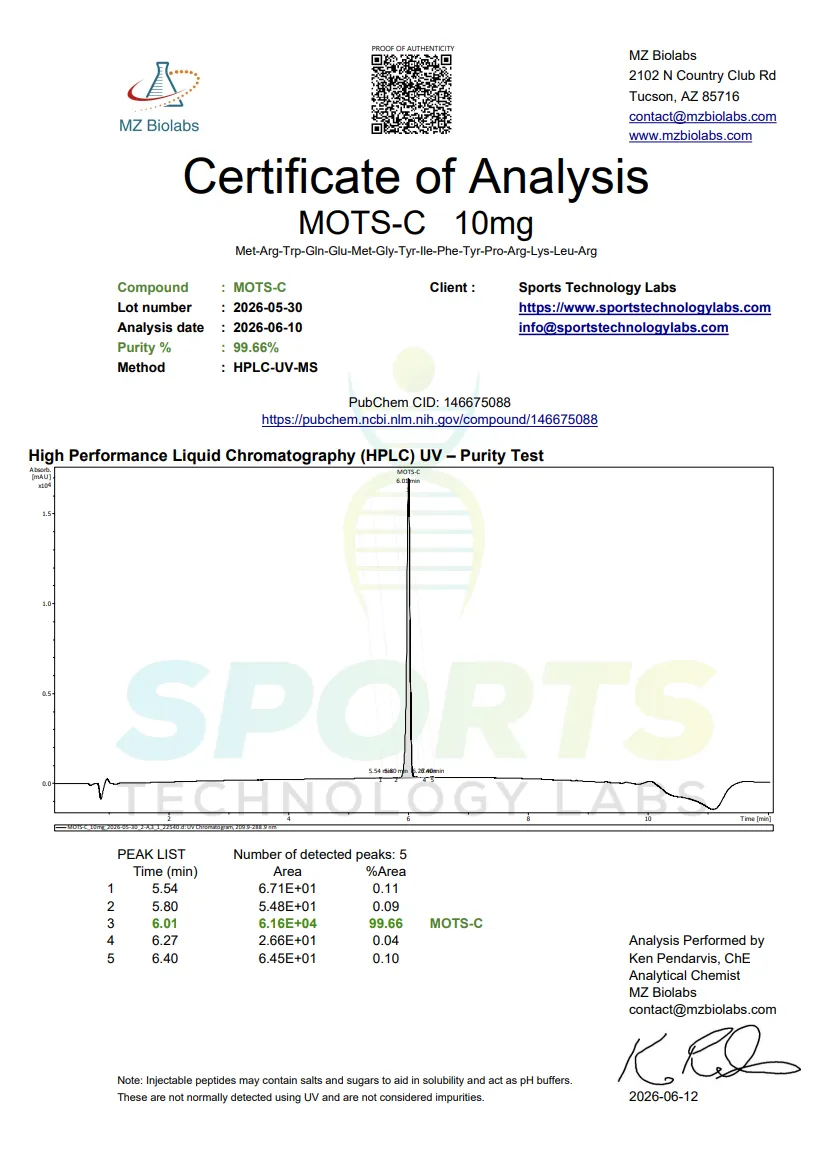
When you buy peptides from Sports Technology Labs you are choosing the highest quality products. Pure compounds tested and certified by accredited American third party labs that accept phone calls to verify the validity of their certificates.
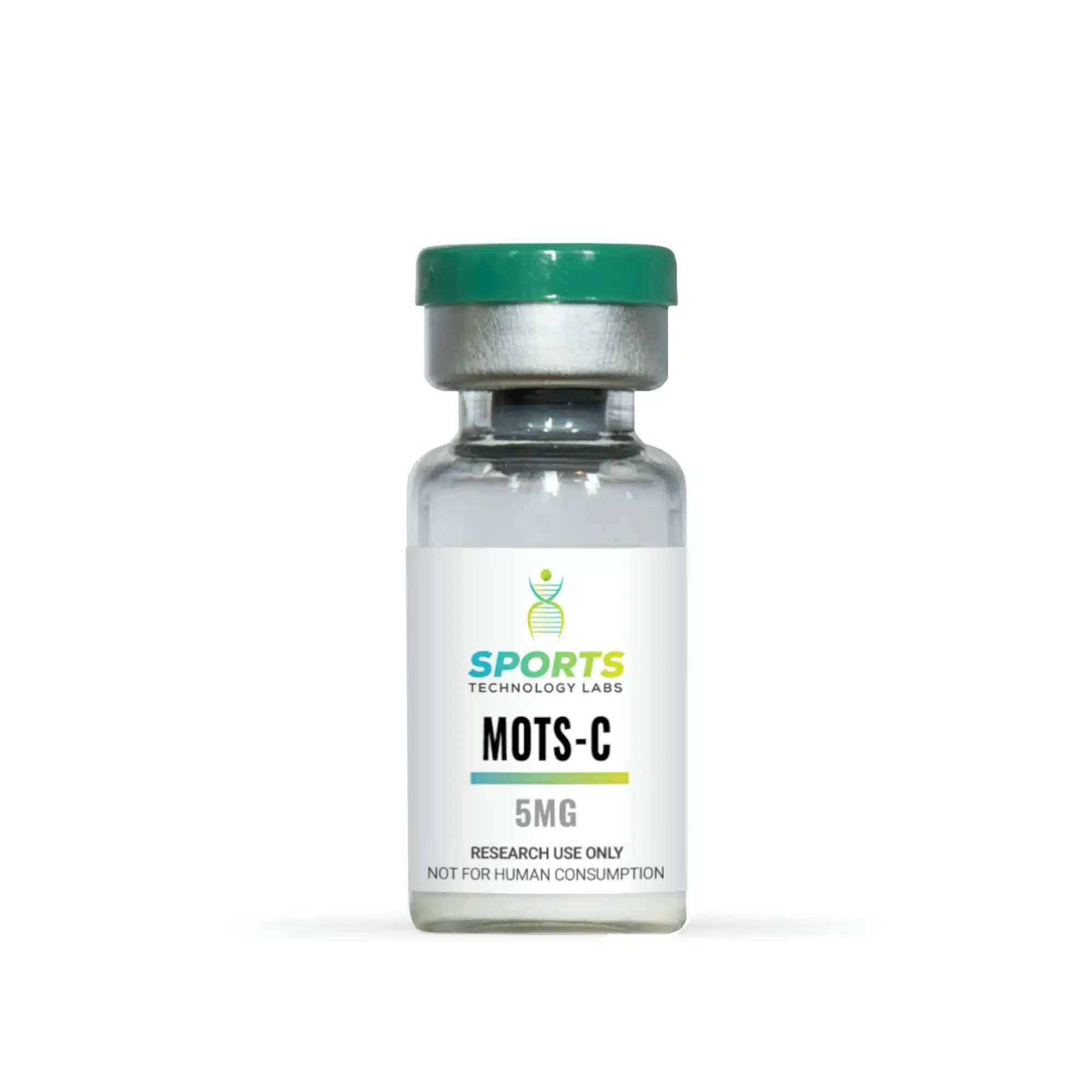
Our products come lyophilized in glass bottles and are stored in refrigeration to prevent degradation in storage.
We run a transparent business, with no discreet payment methods necessary and no misrepresentation of our products, only the highest quality research chemicals available online, secured by our 60-day money-back guarantee.
That’s why we’re confident in our claim that we offer the best MOTS-C for sale on the market today.
For orders totaling $149 or more, we offer free shipping. If you’re in a hurry to receive your products, we also provide express shipping options.
Additionally, customers who sign up for our email list receive a 10% discount, and an additional 10% off when paying with cryptocurrency. And if you have any questions about our MOTS-C and other products, you can also contact us and we’ll respond as soon as possible.
1. Kim SJ, Miller B, Mehta HH, Xiao J, Wan J, Arpawong TE, Yen K, Cohen P. The mitochondrial-derived peptide MOTS-c is a regulator of plasma metabolites and enhances insulin sensitivity. J Physiol Rep. 2019 Jul;7(13):e14171. doi: 10.14814/phy2.14171. PMID: 31293078; PMCID: PMC6640593.
2. Crescenzo R, Bianco F, Mazzoli A, Giacco A, Liverini G, Iossa S. A possible link between hepatic mitochondrial dysfunction and diet-induced insulin resistance. Eur J Nutr. 2016 Feb;55(1):1-6. doi: 10.1007/s00394-015-1073-0. PMID: 26476631.
3. Lu H, Wei M, Zhai Y, Li Q, Ye Z, Wang L, Luo W, Chen J, Lu Z. MOTS-c peptide regulates adipose homeostasis to prevent ovariectomy-induced metabolic dysfunction. J Mol Med (Berl). 2019 Apr;97(4):473-485. doi: 10.1007/s00109-018-01738-w. Epub 2019 Feb 6. PMID: 30725119.
4. Lee C, Kim KH, Cohen P. MOTS-c: A novel mitochondrial-derived peptide regulating muscle and fat metabolism. Free Radic Biol Med. 2016 Nov;100:182-187. doi: 10.1016/j.freeradbiomed.2016.05.015. Epub 2016 May 20. PMID: 27216708; PMCID: PMC5116416.
5. Kim KH, Son JM, Benayoun BA, Lee C. The Mitochondrial-Encoded Peptide MOTS-c Translocates to the Nucleus to Regulate Nuclear Gene Expression in Response to Metabolic Stress. Cell Metab. 2018 Sep 4;28(3):516-524.e7. doi: 10.1016/j.cmet.2018.06.008. Epub 2018 Jul 5. PMID: 29983246; PMCID: PMC6185997.
6. Che N, Qiu W, Wang JK, Sun XX, Xu LX, Liu R, Gu L. MOTS-c improves osteoporosis by promoting the synthesis of type I collagen in osteoblasts via TGF-β/SMAD signaling pathway. Eur Rev Med Pharmacol Sci. 2019 Apr;23(8):3183-3189. doi: 10.26355/eurrev_201904_17676. PMID: 31081069.
7. Hu BT, Chen WZ. MOTS-c improves osteoporosis by promoting osteogenic differentiation of bone marrow mesenchymal stem cells via TGF-β/Smad pathway. Eur Rev Med Pharmacol Sci. 2018 Nov;22(21):7156-7163. doi: 10.26355/eurrev_201811_16247. PMID: 30468456.
8. Fuku N, Pareja-Galeano H, Zempo H, Alis R, Arai Y, Lucia A, Hirose N. The mitochondrial-derived peptide MOTS-c: a player in exceptional longevity? Aging Cell. 2015 Dec;14(6):921-3. doi: 10.1111/acel.12389. Epub 2015 Aug 20. PMID: 26289118; PMCID: PMC4693465.
9. Qin Q, Delrio S, Wan J, Jay Widmer R, Cohen P, Lerman LO, Lerman A. Downregulation of circulating MOTS-c levels in patients with coronary endothelial dysfunction. Int J Cardiol. 2018 Mar 1;254:23-27. doi: 10.1016/j.ijcard.2017.12.001. Epub 2017 Dec 6. PMID: 29242099.
10. Zheng Y, Wei Z, Wang T. MOTS-c: A promising mitochondrial-derived peptide for therapeutic exploitation. Front Endocrinol (Lausanne). 2023 Jan 25;14:1120533. doi: 10.3389/fendo.2023.1120533. PMID: 36761202; PMCID: PMC9905433.
11. Reynolds, J.C., Lai, R.W., Woodhead, J.S.T. et al. MOTS-c is an exercise-induced mitochondrial-encoded regulator of age-dependent physical decline and muscle homeostasis. Nat Commun 12, 470 (2021). https://doi.org/10.1038/s41467-020-20790-0
12. Mots-C Peptide: Exploring its Potential in Health and Longevity. Peptide Information (2023).
| Weight | 0.25 oz |
|---|---|
| Dimensions | 2 × 1 × 1 in |