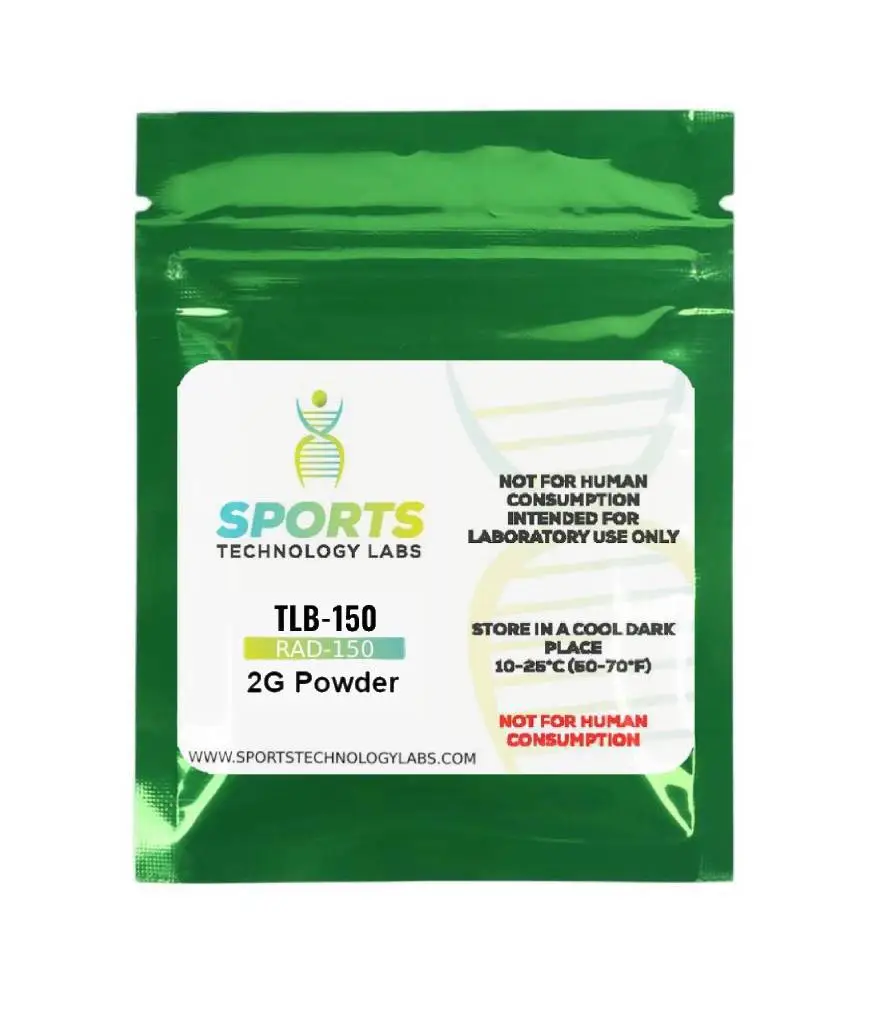
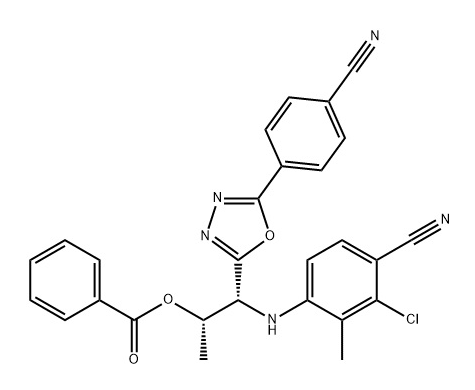
RAD-150, also designated TLB-150 or RAD-140 benzoate, is a synthetic benzoate ester of the non-steroidal selective androgen receptor modulator RAD-140 (testolone). It is catalogued as an androgen receptor modulator for research into esterified SARM analogs. This listing is a research-grade reference compound supplied in powder form for in vitro and laboratory investigation. Identity and purity are third-party verified and documented by a downloadable Certificate of Analysis.
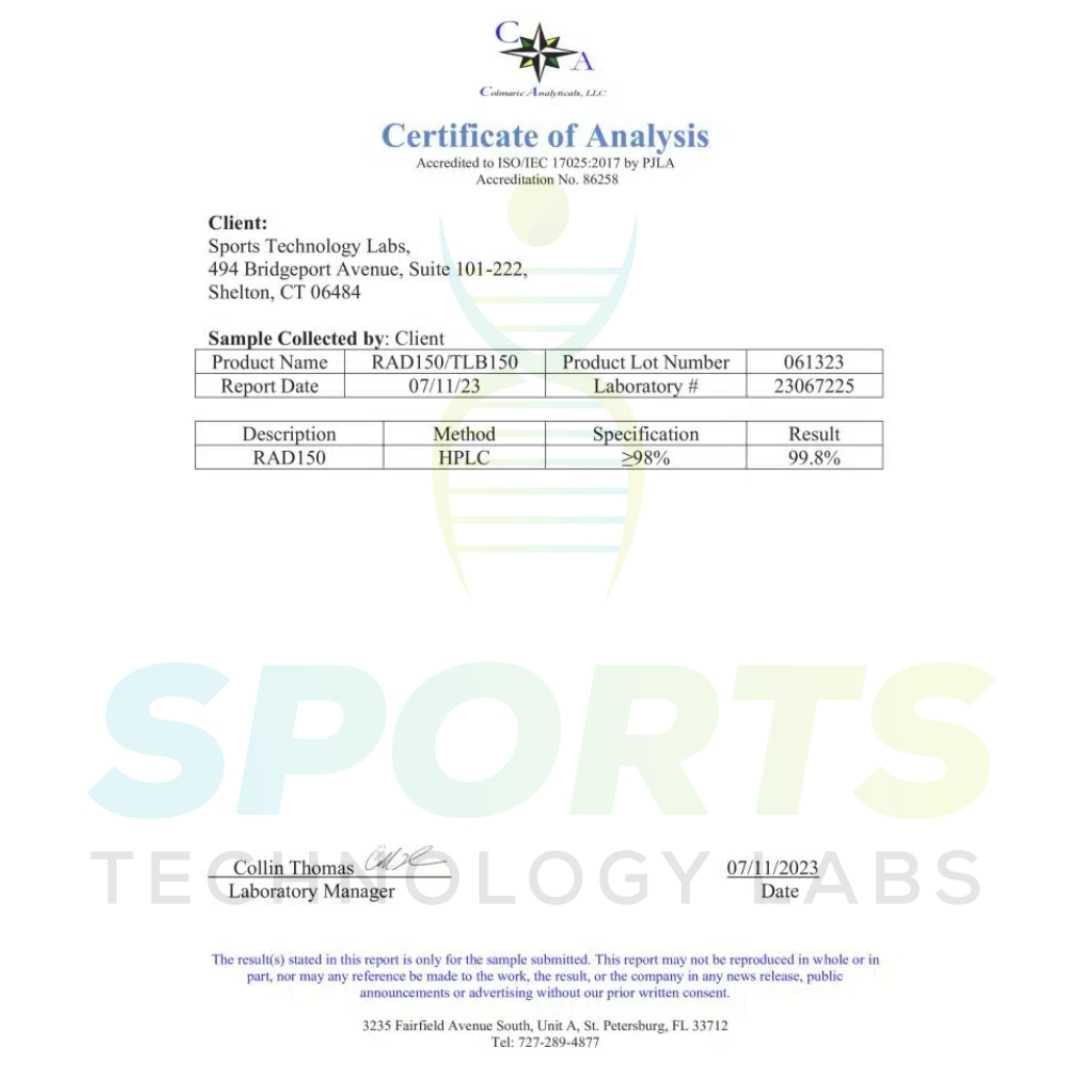
Identity and purity are independently confirmed by MZ Biolabs (Tucson, AZ), a US DEA Schedule III licensed analytical facility (License RP0584676), using HPLC purity analysis and mass-spectrometry identity confirmation under Good Laboratory Practice (GLP) standards to support research reproducibility.
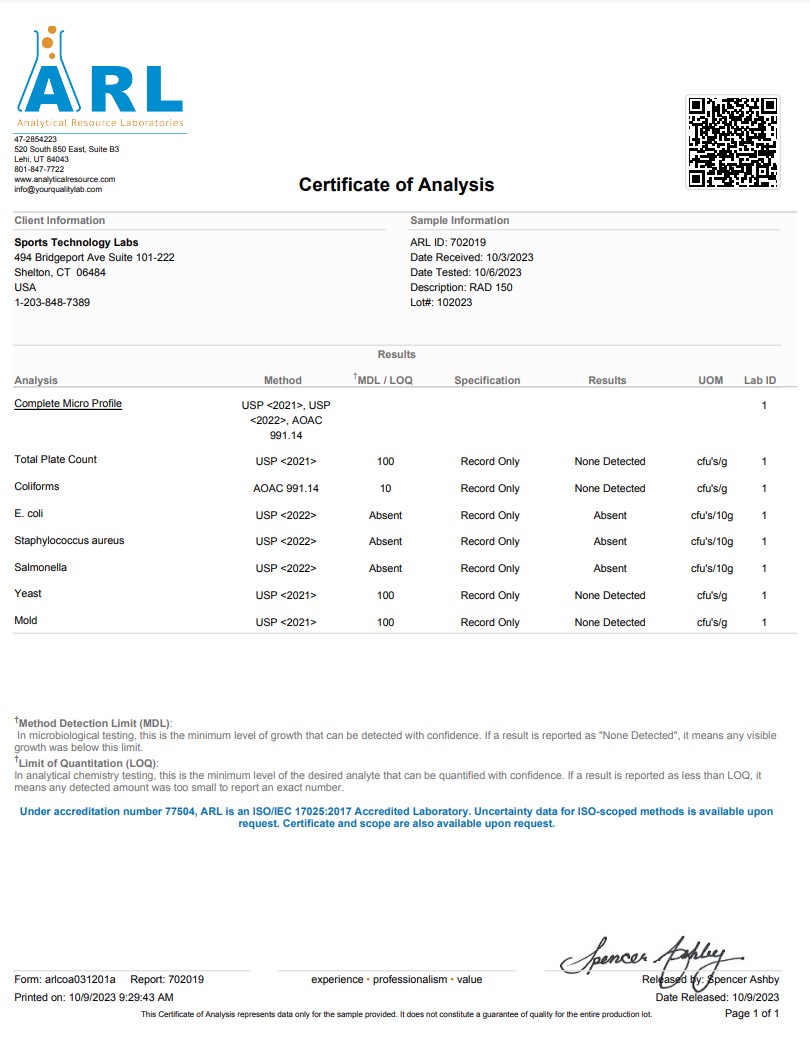
Current certificate of analysis for RAD-150 (TLB-150), issued by MZ Biolabs. Tap to view full size.
Open or download the current RAD-150 COA · View the full COA archive →
Store in a cool, dry place away from direct sunlight to maximize shelf life. Supplied in a UV-resistant foil pouch to minimize photodegradation.
Independent analysis has repeatedly found that materials sold online as SARMs are frequently mislabeled or adulterated. A 2017 JAMA investigation that chemically analyzed products marketed as SARMs found that only a minority accurately matched their labeled contents, and a substantial share contained unapproved or entirely different substances.[4] Third-party testing is the control that distinguishes a documented reference compound from an unverified one.
RAD-150 is structurally derived from RAD-140, a non-steroidal SARM developed by Radius Health whose preclinical characterization was published in 2011.[1] RAD-150 adds a benzoate ester at the hydroxyl group of the RAD-140 backbone, a modification of the kind commonly used to alter lipophilicity and metabolic stability. Unlike its parent compound, RAD-150 has essentially no dedicated peer-reviewed literature: its pharmacology, metabolism, and toxicology have not been characterized in published studies, and properties often attributed to it are extrapolated from RAD-140. RAD-140 itself has been associated with liver enzyme elevations in a Phase I trial and with case reports of drug-induced liver injury.[2][3] RAD-150 has never been evaluated in humans.
This material is supplied strictly as a reference compound to support such laboratory investigation. It is not a therapeutic product, dietary supplement, or sports supplement, and no clinical or performance outcomes are claimed or implied for any individual.
RAD-150 (TLB-150) is an unapproved research compound that has not been approved by the U.S. Food and Drug Administration for human use. It is not a dietary supplement, and marketing it for human ingestion is unlawful. It is supplied exclusively for laboratory research purposes.
For laboratory research use only. This preparation is not approved by the FDA for human use. RAD-150 / TLB-150 is not a dietary or sports supplement and is not intended for human or animal consumption.
All products on this website are intended exclusively for research and development purposes. The statements herein have not been evaluated by the U.S. Food and Drug Administration. Neither the statements nor the products are intended to diagnose, treat, cure, or prevent any disease. Sports Technology Labs are chemical suppliers, not medical practitioners; our expertise is sourcing and quality control.
| Weight | 0.25 oz |
|---|---|
| Dimensions | 3 × 0.3 × 4 in |