Pay with ACH for another 3% OFF! 

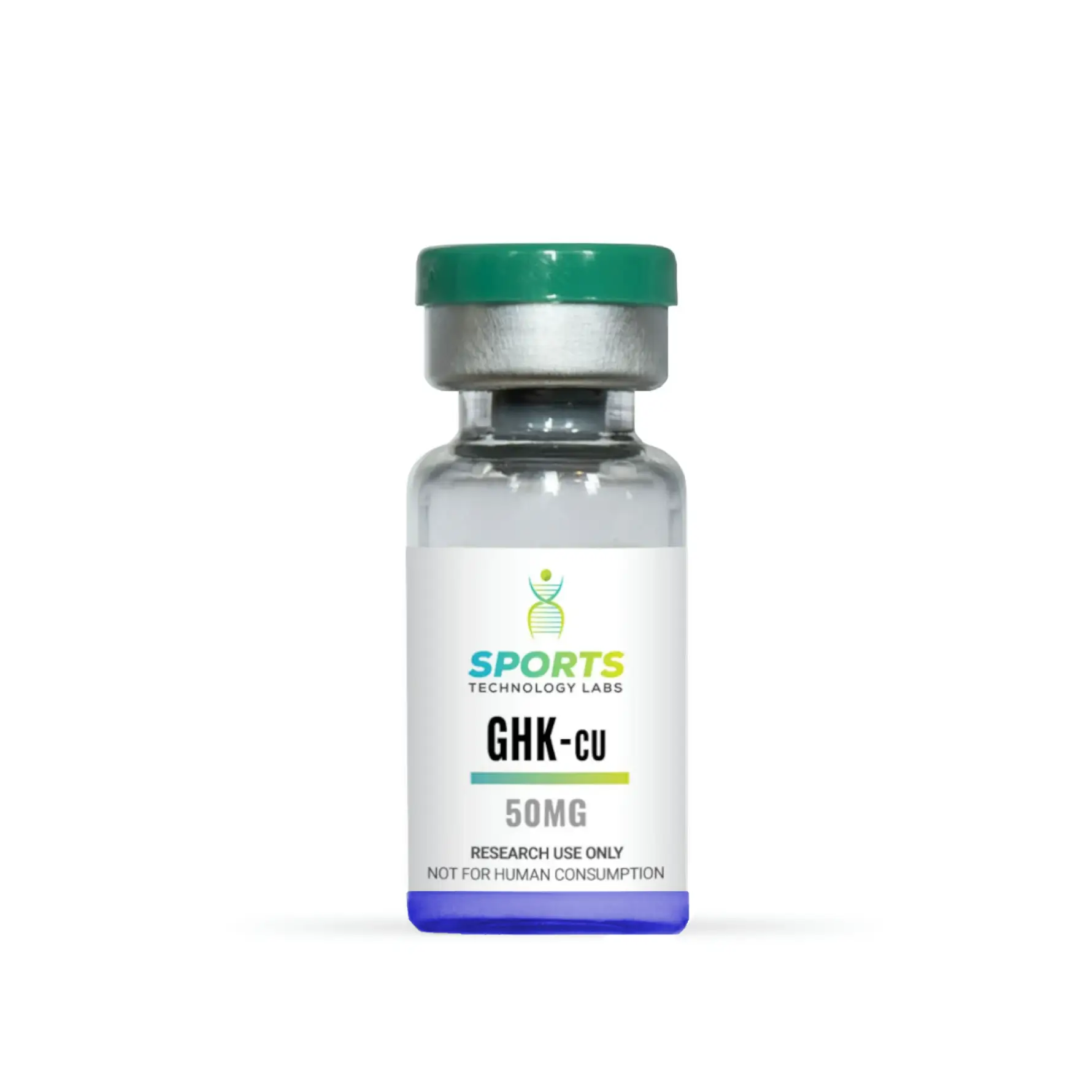
GHK-Cu is a naturally occurring copper complex of the tripeptide glycyl-L-histidyl-L-lysine that has been explored for its potential therapeutic benefits in studies and trials. Surprisingly, it is naturally found in human blood, urine, and saliva and has an effect on wound healing, and skin regeneration. The peptide attracts fibroblasts and immune cells to injured areas and promotes the repair of damaged tissues.
Copper peptide GHK-Cu is a small molecule capable of targeting inflammation and oxidative stress. Studies suggest copper peptides may play a significant role in skin repair processes too.
It does this by stimulating the synthesis of collagen, a key component of the skin’s structure. This stimulation leads to the reduction of scars and improvement in skin texture. It is also capable of the repair of aging skin. It does this by enhancing the elasticity, tightening, and firming the skin, making it a common ingredient in skincare and cosmetic products.
Scientific investigations have unequivocally demonstrated that GHK-Cu possesses the capacity to mitigate the adverse effects of sun exposure, concurrently enhancing the appearance of fine lines and wrinkles. These regenerative attributes of the peptide culminate in skin that is notably smoother and exudes a more youthful and revitalized appearance.
An adequate blood supply is crucial for wound healing and tissue repair. GHK-Cu has demonstrated the ability to encourage the growth of blood vessels assisting these needs.
When combined with fatty acids, GHK-Cu transforms into an antimicrobial compound. In this combination, it can fight off various bacteria and fungi. This also contributes to wound healing by addressing potential pathogens that could impede the process.
This same technique was studied on diabetic patients with ulcers. GHK-Cu aided in healing and reducing the risk of infections in these subjects. Similar results were observed in patients with open wounds and local deficiency of blood supply.
Research conducted on rats has indicated that GHK-Cu can increase levels of L-lysine, a natural painkiller within the body. By increasing L-lysine, GHK-Cu may encompass pain-relieving properties.
L-arginine is another painkilling amino acid that also improves Nitric Oxide synthesis and blood flow. GHK-Cu increases these levels which adds to the potential of this peptide to accompany pain relief.
Research suggests that GHK-Cu plays a protective role in the nervous system, particularly in the brain where it is found in high concentrations. Aging is associated with a decline in GHK-Cu levels, which may contribute to neurodegeneration.
The peptide has been found to increase nerve outgrowth, reduce inflammation, and improve blood vessel development in the central nervous system. It shows potential in fighting the decline of neurological functioning associated with degenerative diseases like Alzheimer’s and has exhibited the ability to reset pathological gene expression.
CAS Number: 89030-95-5
Formula: C14H22CuN6O4
Sequence: (GLY-HIS-LYS)-Cu-HAc
Molar Mass: 340.38 g/mol
Class: Tripeptide
Storage: Keep refrigerated upon reconstitution.
This preparation is for in vitro laboratory research purposes only by license professionals and is not approved by the FDA for bodily introduction of any kind into humans or animals. GHK-cu peptide is not a drug, food, supplement, or cosmetic and may not be misbranded, misused, or mislabeled as a drug, food, supplement or cosmetic.
GHK-Cu is a copper peptide that has shown clinical significance in improving skin firmness and elasticity by promoting collagen formation. GHK-Cu may also reduce hyperpigmentation and skin spots but more research is needed in this area.
Retinol, vitamin C, and alpha hydroxy acids (AHAs) like glycolic acid in a chemical peel, should be avoided when performing research with GHK-cu.
Copper peptides like GHK-Cu may play a role in new hair growth as well as improvement in the health of existing hair follicles due to their anti-inflammatory properties.
Reported side effects of GHK-Cu include nausea, headaches, fatigue, changes in blood pressure or appetite, and injection site irritation.
In a research setting, mixing GHK-Cu with hyaluronic acid is possible. This blend may potentially boost skin hydration in experimental conditions.
GHK can be found naturally in human plasma and urine. It’s also synthesized for use in various lab studies and trials.

If you’re trying to figure out where to buy GHK-cu peptides online, there certainly seem to be plenty of choices out there. However, not all companies offering GHK cu for sale are alike—or equally trustworthy. It is important to only buy peptides online from the most trustworthy sources.
To buy GHK copper peptide from a randomly selected website is dangerous, even if the price looks reasonable, because you can’t be certain about their quality-control processes.
At Sports Technology Labs, however, you can find the highest quality GHK-cu for sale anywhere on the internet with fast shipping. We’re an American business headquartered in Connecticut, and our products are tested in U.S.-based third-party laboratories that certify minimum 98% purity. That’s why we’re confident in our claim that we offer the best GHK-cu for sale on the market today.
We provide free shipping for orders exceeding $149, and for those who require expedited delivery, we also offer express shipping. Customers who subscribe to our email list enjoy a 10% discount, and an extra 10% off when paying with cryptocurrency.
And if you have any questions about our CHK copper peptide and other products, you can also contact us and we’ll respond as soon as possible.
1. Bissett, D. L. (2005). Anti-aging skin care formulations. In Cosmetic formulation of skin care products (pp. 191-210). CRC Press.
2. Pickart, L., Vasquez-Soltero, J. M., & Margolina, A. (2015). GHK peptide as a natural modulator of multiple cellular pathways in skin regeneration. BioMed research international, 2015.
3. Pickart, L., & Margolina, A. (2018). Regenerative and protective actions of the GHK-Cu peptide in the light of the new gene data. International journal of molecular sciences, 19(7), 1987.
4. Pickart, L. (2008). The human tri-peptide GHK and tissue remodeling. Journal of Biomaterials Science, Polymer Edition, 19(8), 969-988.
5. Dou, Y., Lee, A., Zhu, L., Morton, J., & Ladiges, W. (2020). The potential of GHK as an anti-aging peptide. Aging pathobiology and therapeutics, 2(1), 58.
6. Anastassakis, K. (2022). Copper Tripeptides Copper tripeptides. In Androgenetic Alopecia From A to Z: Vol. 2 Drugs, Herbs, Nutrition and Supplements (pp. 225-230). Cham: Springer International Publishing.
7. Wang, X., Liu, B., Xu, Q., Sun, H., Shi, M., Wang, D., … & Feng, B. (2017). GHK‐Cu‐liposomes accelerate scald wound healing in mice by promoting cell proliferation and angiogenesis. Wound repair and regeneration, 25(2), 270-278.
8. Zhao, R., Chen, Y., Ma, Y., Zou, C., Zhang, J., & Chen, Z. (2022). Innovation and transformation of chronic airway diseases. Frontiers in Molecular Biosciences, 9, 1089813.
9. Lau, S. J., & Sarkar, B. (1981). The interaction of copper (II) and glycyl-L-histidyl-L-lysine, a growth-modulating tripeptide from plasma. Biochemical Journal, 199(3), 649-656.
10. Pickart L, et al. The human tri-peptide GHK-Cu in prevention of oxidative stress and degenerative conditions of aging: implications for cognitive health. Oxidative Medicine and Cellular Longevity. 2012; 2012: 324832. doi: 10.1155/2012/324832.
| Weight | 0.25 oz |
|---|---|
| Dimensions | 2 × 1 × 1 in |
