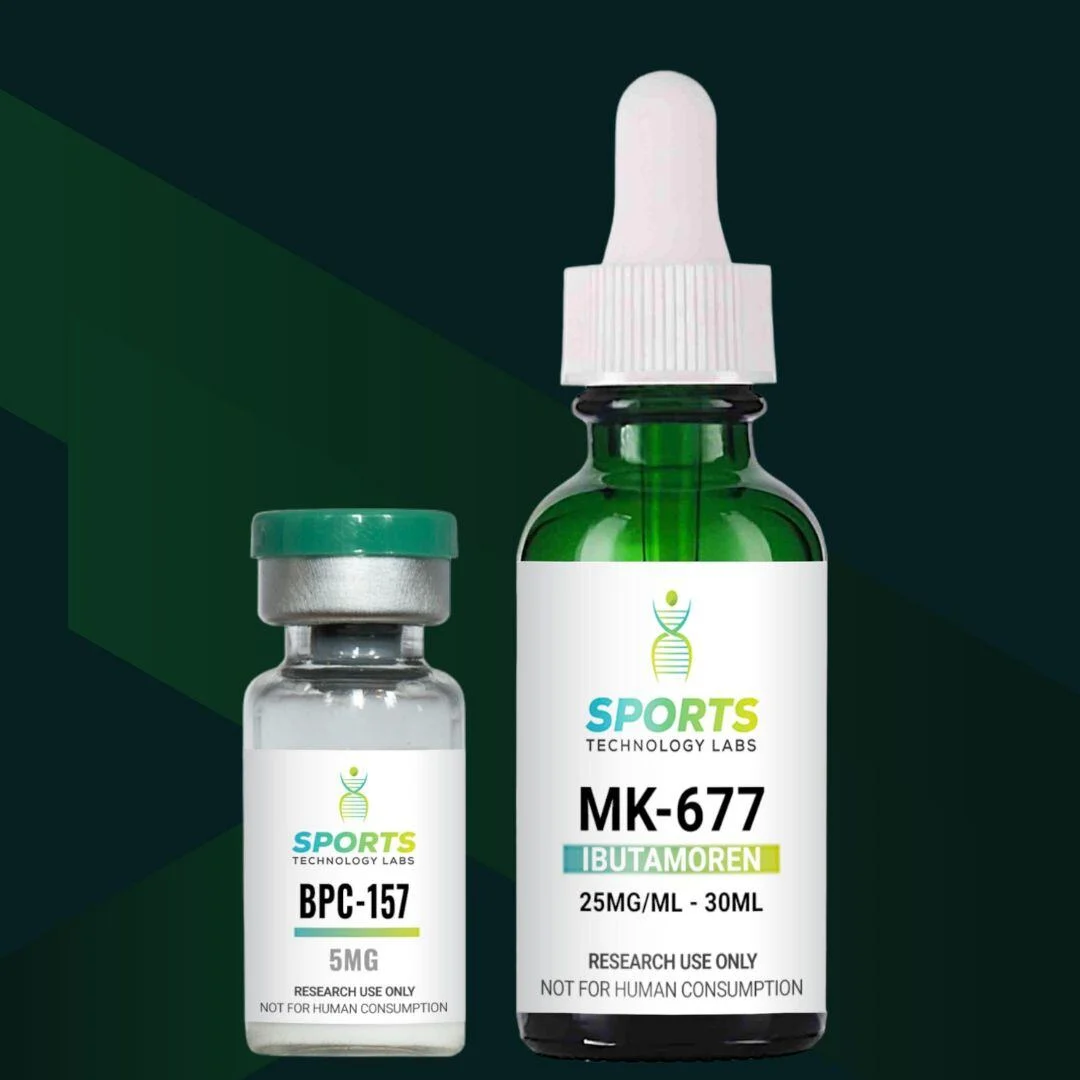
| Compound Class | Synthetic Pentadecapeptide (15 amino acids) · Derived from a sequence within Body Protection Compound (BPC) |
|---|---|
| Form | Lyophilized powder in sterile glass vial |
| Quantity | 5 mg per vial |
| CAS Number | 137525-51-0 |
| Chemical Formula | C62H98N16O22 |
| Molar Mass | 1,419.5 g/mol |
| Half-Life | ~4 hours |
| Amino Acid Sequence | Gly-Glu-Pro-Pro-Pro-Gly-Lys-Pro-Ala-Asp-Asp-Ala-Gly-Leu-Val |
| Synonyms | BPC-157, Body Protection Compound-157, Pentadecapeptide BPC 157 |
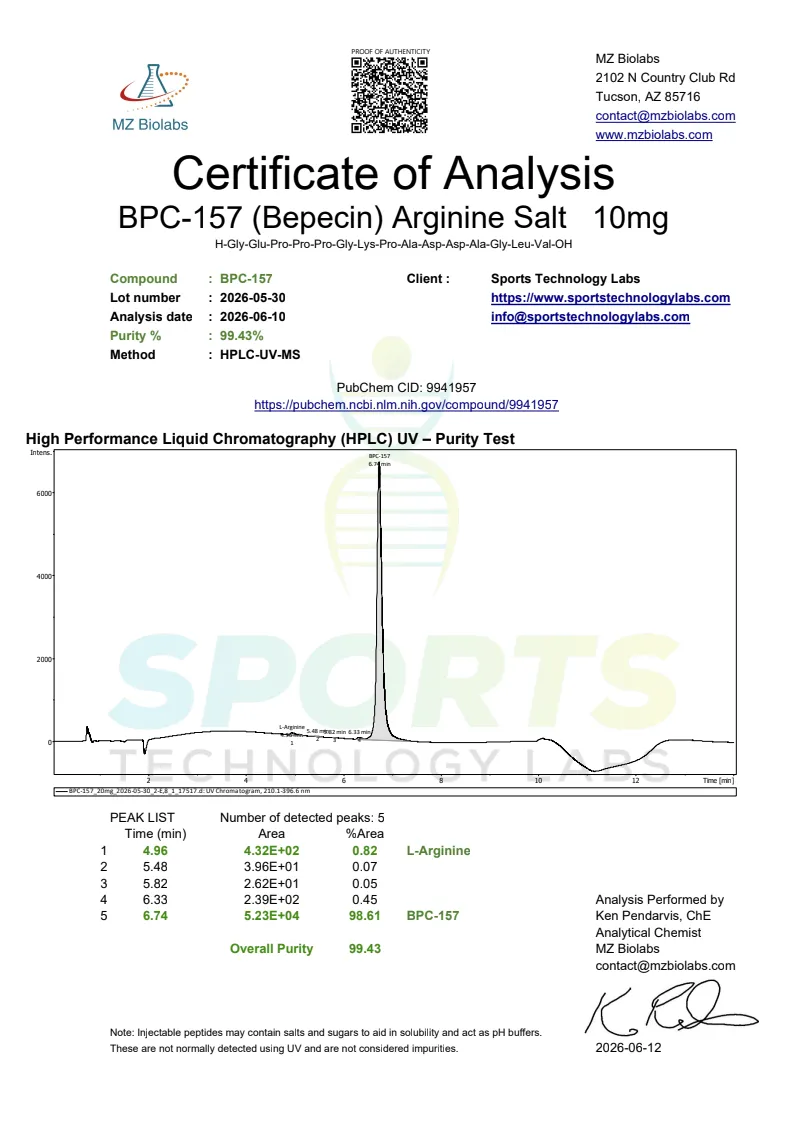
| Verified Purity | Batch-tested to 99.43% (HPLC) |
| Compound Class | Synthetic Polypeptide (43 amino acids) · Analog of thymosin β4 |
|---|---|
| Form | Lyophilized powder in sterile glass vial |
| Quantity | 5 mg per vial |
| CAS Number | 77591-33-4 |
| Chemical Formula | C212H350N56O78S |
| Molecular Weight | 4963.49 g/mol |
| Amino Acid Sequence | Ac-Ser-Asp-Lys-Pro-Asp-Met-Ala-Glu-Ile-Glu-Lys-Phe-Asp-Lys-Ser-Lys-Leu-Lys-Lys-Thr-Glu-Thr-Gln-Glu-Lys-Asn-Pro-Leu-Pro-Ser-Lys-Glu-Thr-Ile-Glu-Gln-Glu-Lys-Gln-Ala-Gly-Glu-Ser-OH |
| Synonyms | TB-500, Thymosin β4 (Tβ4), Thymosin Beta-4 |
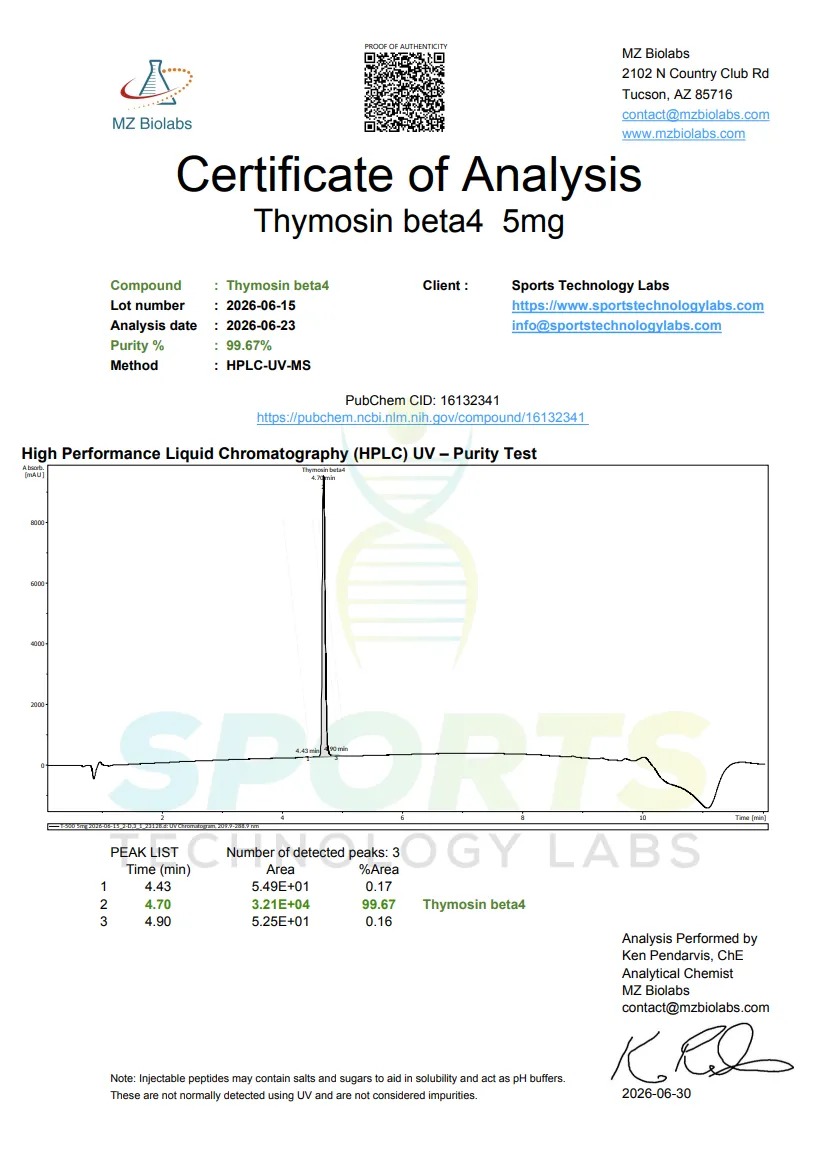
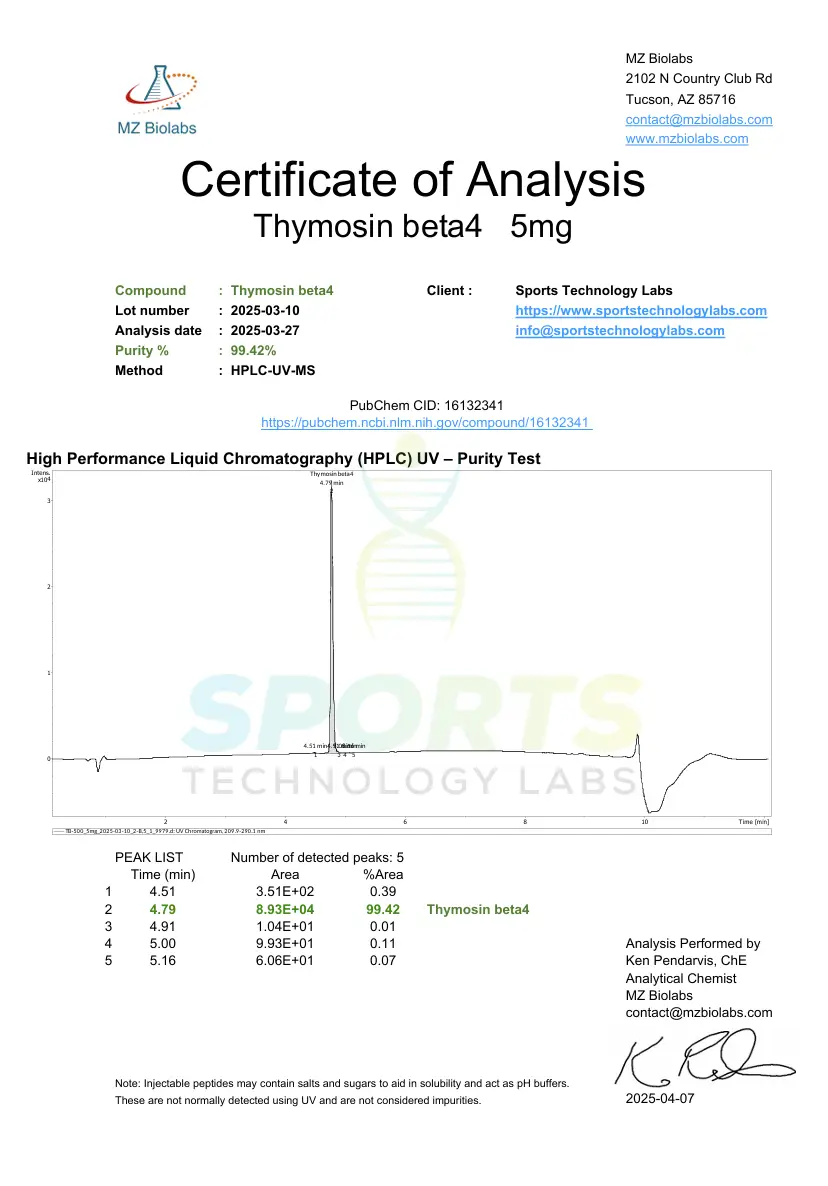
| Verified Purity | Batch-tested to 99.42% (HPLC) |
For laboratory research use only. Not for human or animal consumption.
View certificates of analysisEach peptide in this stack is analyzed by an accredited US third-party laboratory before it ships.
Identity and purity confirmed by MZ Biolabs (Tucson, AZ), a US DEA-licensed analytical facility, via HPLC purity analysis and mass-spectrometry identity confirmation under GLP standards.
Our third-party certificates of analysis are published on our website — no login required.
Peptides are photo- and temperature-sensitive; handle per standard laboratory practice.
Quality control across the research-peptide industry is inconsistent, and many suppliers do not publish third-party testing for their products. Independent verification of identity and purity is essential for reproducible research.
Both peptides verified by MZ Biolabs (Tucson, AZ), an accredited US laboratory, via HPLC and mass spectrometry, with batch-linked COAs.
Freeze-dried into sterile, UV-resistant glass vials and packaged in the USA.
Supports chain-of-custody, label transparency, and batch-linked traceability.
Transparent business, standard payment methods, no misrepresentation.
This stack, colloquially called the “Wolverine stack,” pairs two research peptides — BPC-157 and TB-500 — supplied as separate lyophilized vials. The two are distinct molecules with different structures, described below by identity only.
BPC-157 is a synthetic pentadecapeptide (15 amino acids). Its sequence corresponds to a partial fragment of Body Protection Compound (BPC), a protein identified in human gastric juice. It is used as a research chemical to investigate this peptide in experimental models.
TB-500 is a synthetic peptide analog of thymosin β4, a naturally occurring 43-amino-acid peptide present in many mammalian tissues. Thymosin β4 is characterized biochemically as an actin-sequestering peptide (it binds monomeric G-actin). It is used as a research chemical to investigate thymosin β4 biology in experimental models.
These compounds are supplied strictly as research chemicals for laboratory research. Sports Technology Labs makes no claims regarding their effects, and nothing in this listing should be interpreted as describing outcomes in humans or animals.
Both peptides are investigational research chemicals. They are not approved by the FDA and are not drugs, foods, dietary supplements, or cosmetics. Marketing them for human use is unlawful.
BPC-157 has no approval from any governmental regulatory health authority for human therapeutic use, and as such falls under WADA category S0 (Non-Approved Substances), prohibited at all times (ref. 4).
Thymosin β4 (TB-500) is associated with WADA category S2 (Peptide Hormones, Growth Factors, Related Substances and Mimetics), under growth factors affecting regenerative capacity. Athletes should consult the current WADA Prohibited List (ref. 4).
Sports Technology Labs are chemical suppliers, not medical providers. We do not condone or encourage consumer use of research compounds.
Research use only. All products on this website are intended exclusively for laboratory research and development. They are not for human or animal consumption. These statements have not been evaluated by the U.S. Food and Drug Administration, and these products are not intended to diagnose, treat, cure, or prevent any disease.
| Weight | .5 oz |
|---|---|
| Dimensions | 4 × 2 × 2 in |